
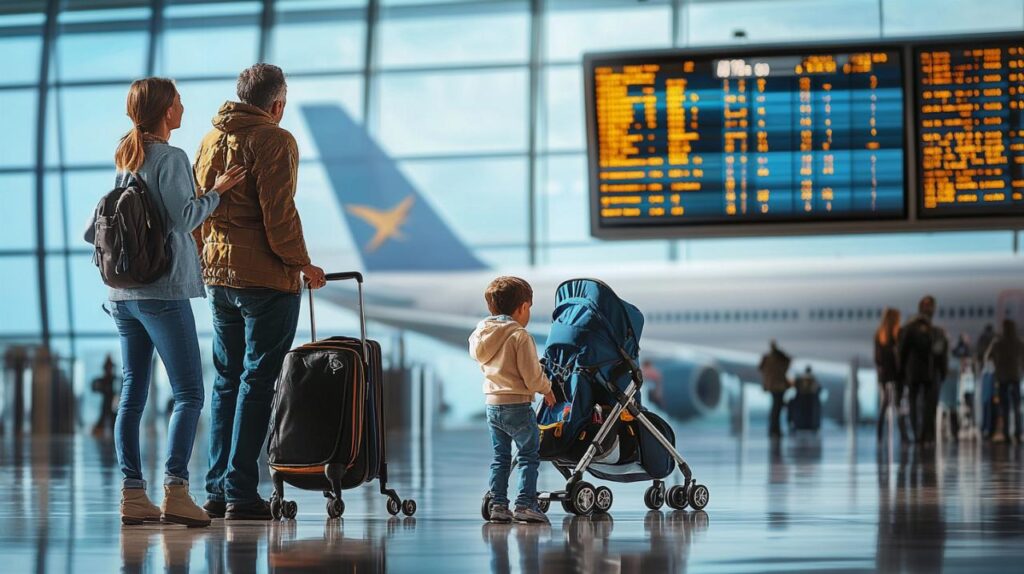
Travelling by air with young children presents a unique set of challenges, and one of the most common questions parents face is whether their pushchair can be brought into the cabin or must be relegated to the hold. The answer is rarely straightforward, as airline policies vary considerably, and understanding these rules can make the difference between a smooth journey and a stressful one. Fortunately, there are practical solutions that can simplify the entire experience, including the option of hiring a buggy at your destination, which many families find surprisingly convenient.
Understanding airline policies: where your pushchair goes during your flight
When planning to fly with a pushchair, the first step is to familiarise yourself with the specific policies of the airline you have chosen. Most carriers do allow pushchairs to be transported at no additional cost when you are travelling with a baby or toddler, which is a relief for families concerned about unexpected fees. This allowance is typically separate from your standard baggage entitlement, meaning you can bring your pushchair without sacrificing suitcase space. However, the rules governing where your pushchair can be stored during the flight differ significantly from one airline to another, and even within the same carrier depending on the size and weight of the buggy in question.
Cabin baggage vs. checked luggage: what different airlines allow
The distinction between cabin baggage and checked luggage is crucial when it comes to pushchairs. Some airlines permit what are commonly referred to as pocket buggies or cabin-approved pushchairs, provided they meet strict dimensional requirements. According to IATA guidelines, a pram suitable for cabin storage should ideally measure no more than fifty-six centimetres in length, forty-five centimetres in width, and twenty-five centimetres in depth. Models such as the BabyZen Yoyo2, which folds to approximately fifty-two by forty-four by eighteen centimetres, are designed precisely for this purpose and can be stowed in overhead compartments. The Micralite Profold, weighing in at just seven kilograms, is another popular choice among families seeking a lightweight stroller that complies with cabin size limits. On the other hand, larger or heavier pushchairs, even if they are foldable, must be checked into the cargo hold. Budget airlines often enforce stricter rules regarding both size and weight, so it is essential to consult the specific policy of carriers such as Ryanair or easyJet before you reach the airport. Ryanair, for instance, allows two free baby equipment items per child but does not permit pushchairs in the cabin, whereas easyJet accepts cabin pushchairs that are under forty-five by thirty-six by twenty centimetres and weigh no more than fifteen kilograms. British Airways offers a more generous approach, allowing prams that measure up to thirty-eight by one hundred and seventeen by thirty-eight centimetres to be taken to the aircraft door, with smaller models permitted as hand luggage. Jet2, meanwhile, allows a collapsible pushchair in the hold with a maximum weight of ten kilograms, or a cabin pushchair that adheres to dimensions of fifty-six by forty-five by twenty-five centimetres and also weighs no more than ten kilograms.
Gate-checking your buggy: the most common solution for travelling families
For many families, gate-checking offers the ideal compromise between convenience and compliance with airline regulations. This process allows you to use your pushchair throughout the airport, right up until the moment you board the aircraft, at which point it is taken by staff and stored in the hold. Upon arrival, the pushchair is returned to you at the gate or on the air bridge, meaning you can resume using it immediately. This method is particularly appealing because it minimises the time spent carrying or managing your child without the assistance of a buggy, which can be exhausting in busy terminals. Gate-checking is also free of charge with most carriers, and it typically does not require you to surrender any part of your standard luggage allowance. Airlines such as TUI permit pushchairs weighing up to ten kilograms to be used until boarding, while Qatar Airways allows one free pram per child with a similar gate-check arrangement. The process is straightforward: you simply fold the pushchair at the gate, hand it over to the ground crew, and collect it once you disembark. However, it is worth noting that gate-checked items can occasionally suffer from rough handling, so protecting your pushchair with a sturdy travel bag or pram cover is highly recommended. Some parents also take a photograph of the buggy before handing it over, which can be useful for insurance purposes should any damage occur during transit.
The Practical Challenges of Flying with Your Own Pushchair
While bringing your own pushchair on a flight offers the advantage of familiarity and comfort for your child, it is not without its drawbacks. The logistics of transporting a bulky item through an airport, the risk of damage during handling, and the limitations imposed by airline size and weight restrictions all contribute to the stress of the journey. For families who travel frequently or who are heading to destinations with challenging terrain, these practical challenges can quickly add up, prompting many to reconsider whether bringing their own pushchair is truly the best option.
Potential damage and wear: protecting your investment during air travel
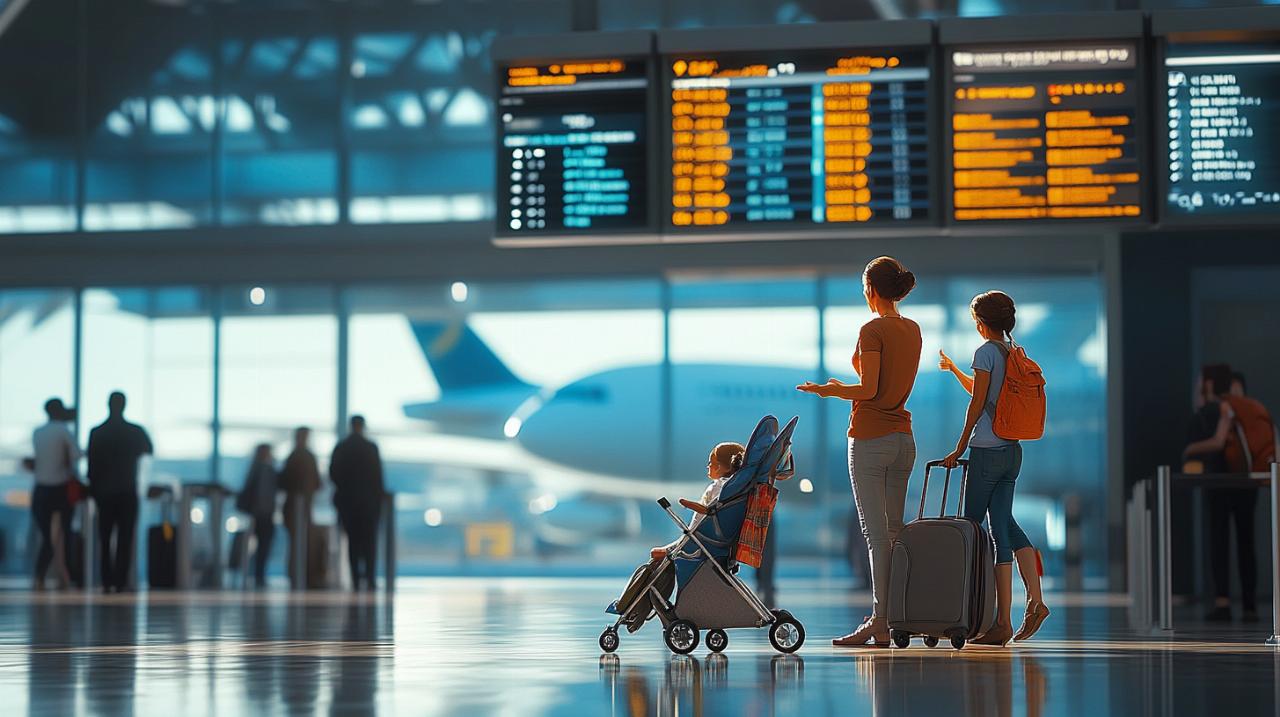
One of the most significant concerns when flying with a pushchair is the potential for damage. Buggies that are checked into the hold are often subjected to rough handling, and even the most robust models can suffer scratches, bent frames, or broken wheels. This is particularly worrying if you have invested in a high-quality, lightweight stroller such as the iCandy Pip, which weighs seven point six kilograms and is cabin-luggage approved, or the Joie Tourist, which is suitable from birth to fifteen kilograms and folds down to seventy-seven by forty-eight by twenty-seven centimetres. To mitigate the risk, many families opt to use a stroller bag or wrap the pushchair in bubble wrap before handing it over, though this adds to the bulk and inconvenience of the journey. Travel insurance that covers baby equipment is another sensible precaution, as standard policies may not automatically include pushchairs. Some parents choose to travel with a cheaper, less sentimental buggy specifically for flying, reserving their more expensive models for use at home. The Joie Pact, priced at around one hundred and sixty pounds, is a popular choice for this purpose, as it is both affordable and well-suited to sunny holiday destinations. Similarly, the Hauck Travel N Care, weighing just six point six kilograms and folding to twenty-eight by fifty by seventy-three centimetres, offers good value for families who want a reliable travel pushchair without the worry of damaging a premium model.
Navigating airports with young children: the logistical headache
Even if your pushchair escapes unscathed, the process of manoeuvring through an airport with young children and a buggy can be exhausting. Long queues at check-in desks, security checks that require you to fold and unfold the pushchair multiple times, and crowded terminals all contribute to a sense of chaos. If you are travelling with more than one child, the situation becomes even more complex, as you may need to manage additional items such as a car seat or a baby carrier. Some families find that a sling or soft carrier is a more practical alternative for navigating airports, as it keeps your hands free and eliminates the need to worry about size limits or overhead compartments. The Ergobaby Metro+, which retails for approximately two hundred and ninety-nine pounds, is compact and slimline, making it easier to handle in tight spaces, but even this can feel cumbersome when combined with hand luggage and other essentials. Arriving at the airport early is often recommended to reduce stress, but this is easier said than done when you are already contending with the unpredictable nature of travelling with toddlers. The cumulative effect of these logistical headaches leads many families to explore alternatives that might make the journey smoother and more enjoyable for everyone involved.
Why airport buggy hire offers a sensible alternative
For families who are short on luggage space, concerned about potential damage to their own pushchair, or simply looking to simplify their travel experience, hiring a buggy at the airport or destination can be an attractive option. This approach allows you to travel light and eliminates many of the practical challenges associated with bringing your own pushchair on a plane. Whether you are heading to a destination with difficult terrain or simply want to avoid the hassle of gate-checking, buggy hire services are increasingly popular among savvy travellers.
Travelling light: the freedom of not bringing your own pushchair
One of the most compelling advantages of hiring a buggy is the freedom it affords. Without the need to lug a pushchair through the airport, you can focus on managing your children and your hand luggage, which can make the entire journey feel significantly less stressful. This is particularly beneficial if you are flying with a budget airline that imposes strict baggage allowances, as you can avoid the risk of exceeding weight limits or incurring additional charges. Hiring a buggy also means you do not have to worry about your pushchair being damaged in the hold or lost in transit, which is a genuine concern for many families. Moreover, if you are travelling to a location with cobbled streets, sandy beaches, or rugged paths, the pushchair you hire may be better suited to the local conditions than your own model. Many rental services offer a range of options, from lightweight strollers suitable for city breaks to more robust travel systems designed for outdoor adventures. This flexibility can enhance your holiday experience, allowing you to choose the right equipment for the specific demands of your trip without the commitment of purchasing a new pushchair outright.
Cost-effective and convenient: how rental services simplify family holidays
From a financial perspective, hiring a buggy can also be a cost-effective choice, especially if you travel infrequently or are planning a short trip. Rather than investing in a dedicated travel pushchair that may only be used a handful of times, you can pay for a rental service that meets your immediate needs. Many companies offer competitive rates and convenient delivery options, with some providing free delivery for orders over a certain threshold, such as forty-nine pounds and ninety-nine pence. Payment plans are also available with certain retailers, allowing you to spread the cost over up to twenty-four months if you do decide to purchase a pushchair instead. However, for those who prefer to hire, the convenience of having a buggy waiting for you upon arrival at your destination cannot be overstated. It eliminates the need to navigate the airport with your own pushchair, and it means you can begin your holiday immediately without the stress of collecting your belongings from the baggage carousel or checking for damage. Some services even offer an excellent rating on Trustpilot, providing reassurance that the quality and reliability of the equipment are up to standard. Additionally, rental services often include features such as easy returns with a thirty-day policy and best-price guarantees with price match promises, which further enhance the appeal of this option. For families who value convenience and peace of mind, airport buggy hire represents a sensible and increasingly popular alternative to the traditional approach of flying with your own pushchair.