
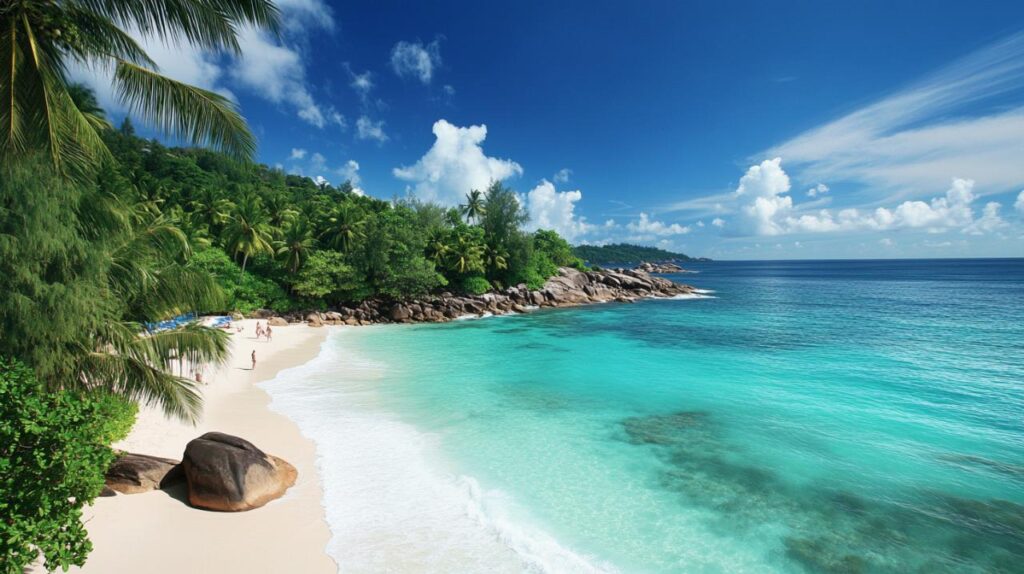
Seychelles, an archipelago of stunning natural beauty nestled in the Indian Ocean, has long attracted adventurers, holidaymakers, and those seeking new opportunities abroad. Beyond its pristine beaches and lush landscapes, the islands present a unique employment market and lifestyle that merits careful consideration. Whether you are contemplating a career move, planning an extended stay, or simply curious about what life might look like on these tropical shores, understanding the financial landscape and administrative necessities is essential for making informed decisions.
Understanding Wages and Employment Opportunities in Seychelles
What is the Average Salary Across Different Sectors?
The average monthly salary in Seychelles hovers around 15,000 Seychellois Rupees monthly, a figure that reflects the diverse economic activities across the islands. This estimate can vary depending on whether you are looking at the formal sector alone or the broader employment landscape that includes casual and informal work arrangements. Salaries tend to be competitive in key industries, particularly within tourism and the public sector, where demand for skilled professionals remains consistently strong. The minimum wage stands at 5,804 SCR monthly, ensuring a baseline level of income for workers across various roles. For those entering the labour market with limited experience, this threshold provides a foundation, though many positions, especially those requiring specialised skills or qualifications, command significantly higher remuneration.
Several factors influence earning potential in Seychelles, ranging from educational background and professional experience to the dynamics of supply and demand within specific sectors. Higher education and technical expertise are rewarded with better pay, particularly in fields such as finance, information technology, and healthcare. Experience plays a crucial role as well, with seasoned professionals in tourism management, engineering, and financial services earning considerably more than their junior counterparts. The limited size of the local labour force creates upward pressure on wages for certain occupations, as employers compete to attract talent. Government policy, including employment standards and minimum wage legislation, further shapes the salary structure, while trade unions actively negotiate for improved wages and benefits on behalf of their members. The high cost of living in Seychelles also influences salary levels, as employers must offer competitive compensation to ensure that workers can maintain a reasonable standard of living. Foreign investment and the presence of international businesses contribute to this dynamic, often setting salary benchmarks that reflect global standards, particularly in corporate and financial roles. Inflation remains a factor that affects purchasing power, prompting periodic wage adjustments to help workers keep pace with rising prices.
When it comes to the highest paying occupations, several roles stand out for their substantial earning potential. Chief Executives and Senior Officials command premium salaries, reflecting their strategic responsibilities and leadership roles within organisations. Financial Managers and Analysts are similarly well-compensated, given the importance of the financial services sector to the Seychellois economy. Legal Professionals and Medical Doctors enjoy high earnings due to the specialised nature of their work and the critical services they provide. Engineering Managers, ICT Specialists, and Hotel and Resort Managers also rank among the top earners, with the latter benefiting from the robust tourism industry that drives much of the nation's economic activity. Aviation Professionals and Maritime and Shipping Managers are valued for their expertise in sectors vital to the islands' connectivity and trade, while Educational Administrators play a key role in shaping the future workforce. A notable gender wage gap persists in Seychelles, influenced by occupational segregation, differences in educational background and work experience, the prevalence of part-time employment among women, and potential biases within hiring and promotion practices.
Key Industries and Job Prospects for Expats
Tourism is the lifeblood of the Seychellois economy, offering a wealth of opportunities for both local and foreign workers. Hotels, resorts, and hospitality services are perpetually in need of skilled staff, from front-of-house roles to management positions. The fishing sector also plays a significant role, supporting livelihoods and contributing to export revenues. Financial services have grown in importance, with the islands positioning themselves as an offshore financial centre that attracts international firms and professionals. These three pillars—tourism, fishing, and financial services—define the employment landscape and offer diverse prospects for expats with the right qualifications and experience.
For those considering a move, it is worth noting that Seychelles offers salaries that are competitive within the region, though they lag behind those in more developed economies. When compared with other countries, the average monthly salary in Seychelles translates to approximately 1,300 US dollars, which is higher than figures seen in India or Brazil but lower than earnings in South Africa, and significantly below the averages in the United Kingdom, Germany, or the United States. This context is important for expats weighing the financial implications of relocation, as it highlights both the opportunities and the limitations of the local labour market. Annual wage growth has been largely positive in recent years, supported by government policies aimed at boosting employment standards and improving living conditions. However, growth rates are inevitably influenced by inflation, broader economic development, and external factors such as global tourism trends and commodity prices.
Compensation costs per hour in Seychelles encompass not only wages and salaries but also social security contributions, health insurance, and other benefits mandated by law or negotiated through collective agreements. These costs vary by sector, enterprise size, and the skill level of the workforce, with larger firms and unionised workplaces typically offering more comprehensive packages. For expats, understanding the full scope of compensation is crucial, as benefits such as health cover and pension contributions can significantly enhance the overall value of an employment offer.
Navigating Visa Requirements and Work Permits for Seychelles
Types of Visas and Gainful Occupation Permits Explained
Travelling to Seychelles is refreshingly straightforward for visitors, as no traditional visa is required for entry. Instead, travellers must obtain a travel authorisation, which can be applied for online up to 30 days before departure. Express applications are available for those in need of a faster turnaround, though an additional fee applies. Upon arrival, visitors receive a permit allowing them to stay for up to three months, with the possibility of extending this period to a total of twelve months. Your passport must remain valid for the entire duration of your stay, and you will need to present a return or onward ticket, proof of accommodation, and sufficient funds to cover your expenses while on the islands. Travel insurance may also be requested at the point of entry, so it is wise to have documentation readily available. If you are arriving from a country with a yellow fever transmission risk, a valid vaccination certificate is mandatory. Additionally, any traveller bringing in cash amounts of 50,000 Seychellois rupees or more must declare this when applying for travel authorisation.
For those looking to work in Seychelles, the situation is more involved. A Gainful Occupation Permit, commonly known as a GOP, is required for all foreign workers intending to undertake full-time or part-time employment, regardless of whether the work is paid or unpaid. This permit is a legal necessity, and working without one can result in serious consequences, including fines and deportation. The GOP requirements are managed by the Immigration and Civil Status Department, which oversees all matters related to foreign workers and their authorisation to engage in gainful activity on the islands. Understanding the GOP process is essential for anyone planning to relocate for work, as it ensures compliance with local laws and provides the legal framework for employment.
Step-by-step guide to securing your work authorisation
Securing a Gainful Occupation Permit begins with an offer of employment from a Seychellois employer, who must demonstrate that the position cannot be filled by a local candidate. This requirement reflects the government's commitment to prioritising employment opportunities for Seychellois nationals while still recognising the need for foreign expertise in certain sectors. Once you have a job offer, your prospective employer will typically initiate the GOP application on your behalf, submitting the necessary documentation to the Immigration and Civil Status Department. This documentation includes proof of your qualifications, a valid passport, a detailed job description, and evidence that the employer has advertised the position locally without finding a suitable candidate. Additional requirements may include a medical certificate, a police clearance certificate from your home country, and proof of accommodation in Seychelles.
The processing time for a GOP can vary, so it is advisable to begin the application well in advance of your intended start date. The Immigration and Civil Status Department, located at Independence House in Victoria on Mahe, is the primary point of contact for all queries related to work permits and can be reached by phone or email. Their staff can provide guidance on the specific requirements for your occupation and assist with any complications that may arise during the application process. It is also worth noting that the department offers a range of other services, including the issuance of residence permits, student permits, and dependents permits, should you wish to bring family members with you to Seychelles.
Once your GOP is approved, you will be authorised to work in Seychelles for a specified period, typically aligned with the duration of your employment contract. Renewals are possible, provided that your employer continues to sponsor your application and that you remain compliant with all immigration regulations. It is essential to keep your permit up to date, as lapses can result in legal difficulties and may jeopardise your ability to remain in the country. The department also oversees border control and citizenship claims, ensuring that all foreign nationals residing in Seychelles do so in accordance with the law.
Cost of Living and Financial Considerations for Expats
Accommodation, healthcare, and daily expenses breakdown
The cost of living in Seychelles is notably high, a reflection of the islands' remote location and reliance on imported goods. Accommodation represents one of the most significant expenses for expats, with rental prices varying widely depending on location, size, and proximity to amenities. Properties in Victoria and other central areas command premium rates, while more remote locations may offer more affordable options, albeit with the trade-off of longer commutes and reduced access to services. Utilities, including electricity and water, can also be expensive, as the islands' infrastructure must contend with the challenges of limited natural resources and the need for energy imports.
Daily expenses, from groceries to dining out, are generally higher than in many other countries, with imported goods carrying a substantial markup. Fresh produce and locally caught fish are often more affordable than imported items, and shopping at local markets can help stretch your budget. Transport costs are relatively modest if you rely on public buses, though many expats opt to purchase a vehicle for greater convenience. Fuel prices are comparable to those in other island nations, and insurance and maintenance must be factored into your overall transport budget.
Healthcare in Seychelles is provided through a combination of public and private services. The public healthcare system offers free or heavily subsidised care to residents, including certain categories of foreign workers, though expats are often advised to secure private health insurance to ensure access to a broader range of services and to avoid potential waiting times. Private healthcare facilities are available, particularly on Mahe, and offer high-quality care, though costs can be significant. It is essential to clarify your healthcare entitlements with your employer and to ensure that your insurance coverage is adequate for your needs. Some employment packages include health insurance as part of the compensation, which can substantially reduce out-of-pocket expenses.
Managing Your Finances and Banking in Seychelles
Managing your finances in Seychelles requires careful planning, particularly given the high cost of living and the need to navigate a relatively small banking sector. The country's banks offer a range of services, including current and savings accounts, loans, and foreign exchange. Opening a bank account is generally straightforward, though you will need to provide identification, proof of address, and, in some cases, a letter from your employer. Some banks require that you hold a valid GOP or residence permit before you can open an account, so it is advisable to check the specific requirements of your chosen institution in advance.
Foreign exchange services are widely available, and the Seychellois Rupee is the official currency, though US dollars and euros are also commonly accepted, particularly in tourist areas. It is worth noting that exchange rates can fluctuate, and it is often more economical to exchange larger sums at official banks rather than relying on airport kiosks or hotels. Many expats choose to maintain accounts in both their home country and Seychelles, facilitating the transfer of funds and providing a safety net in case of emergencies. International money transfer services are available, though fees and processing times can vary, so it is worth comparing options to find the most cost-effective solution.
Budgeting is crucial for expats, as the high cost of living can quickly erode savings if expenses are not carefully monitored. It is wise to establish a realistic monthly budget that accounts for rent, utilities, groceries, transport, healthcare, and leisure activities, with a buffer for unexpected costs. Tracking your spending and adjusting your habits as needed can help ensure that you live comfortably within your means. Some expats find it helpful to join online forums or local social groups to share tips and advice on managing finances in Seychelles, as these communities can offer valuable insights into cost-saving strategies and the best places to shop for essentials.
Taxation is another important consideration, as Seychelles operates a progressive income tax system with rates that vary depending on your earnings. Your employer will typically deduct tax at source, though it is your responsibility to ensure that your tax affairs are in order and that you comply with all local regulations. The Seychelles Revenue Commission administers tax collection and can provide guidance on your obligations, including any deductions or allowances for which you may be eligible. For those earning income from abroad or holding assets in other countries, it may be necessary to seek professional tax advice to ensure compliance with both Seychellois and international tax laws. Understanding your tax position is essential for effective financial planning and can help you avoid unexpected liabilities or penalties.