
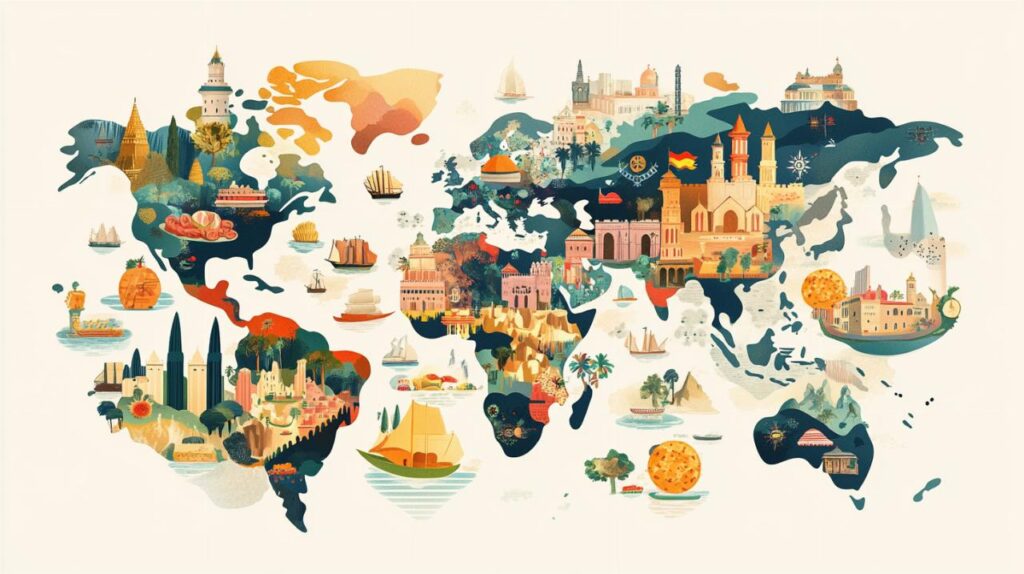
Across our planet, nations are scattered in every corner, each possessing a unique blend of traditions, landscapes and histories. When we narrow our focus to those countries whose names begin with the letter U, we find ourselves exploring territories as varied as the mountain ranges of Central Asia, the vibrant coasts of East Africa, the deserts of the Arabian Peninsula, the rolling countryside of the British Isles, the sprawling plains of North America, the pastoral beauty of South America and the rich cultural tapestry of Eastern Europe. These seven nations, despite their shared initial letter, offer a remarkable spectrum of experiences, populations and identities that reflect the diversity of human civilisation.
A Comprehensive Overview of Nations Beginning with 'U'
Understanding the Geographical and Demographic Landscape
Uganda stands as a landlocked gem in East Africa, with a population estimated to reach approximately 52.7 million by 2026. Spread across a land area of 199,810 square kilometres, this nation boasts a population density of 264 people per square kilometre, making it one of the more densely populated countries on the continent. The landscape is characterised by lush highlands, sprawling savannas and the stunning presence of Lake Victoria, which forms part of its southern boundary. In sharp contrast, Ukraine occupies a vast expanse of 579,320 square kilometres in Eastern Europe, with an estimated population of around 39.5 million. The density here is considerably lower, at 68 people per square kilometre, reflecting the wide open plains and fertile agricultural regions that define much of the country. Meanwhile, the United Arab Emirates, with its 83,600 square kilometres, supports a population of approximately 11.5 million, resulting in a density of 138 people per square kilometre, concentrated largely in urban centres such as Dubai and Abu Dhabi.
The United Kingdom, a collection of four distinct countries, spans 241,930 square kilometres and is home to nearly 70 million people, translating to a density of 289 people per square kilometre. This relatively high density reflects centuries of urbanisation and industrial development. Across the Atlantic, the United States of America dominates with a land area of 9,147,420 square kilometres and a population approaching 349 million, though its density remains modest at 38 people per square kilometre due to vast rural and wilderness areas. In South America, Uruguay offers a quieter presence, with a population of approximately 3.3 million spread over 175,020 square kilometres, resulting in one of the lowest densities at 19 people per square kilometre. Finally, Uzbekistan in Central Asia, covering 425,400 square kilometres, is home to around 37.7 million people, with a density of 89 people per square kilometre, supported by the fertile valleys and ancient cities along the historic Silk Road.
Cultural diversity across five distinct countries
Each of these nations brings its own cultural flavour to the global stage, shaped by centuries of migration, conquest, trade and innovation. Uganda's culture is deeply rooted in indigenous traditions, with over 50 ethnic groups contributing to a vibrant mosaic of languages, music and dance. The country has become a sanctuary for wildlife conservation, particularly noted for being home to half of the world's remaining mountain gorilla population, a fact that draws travellers and researchers from around the world. Ukraine, positioned at the crossroads of Europe and Asia, has absorbed influences from Byzantine, Ottoman, Polish and Russian cultures, creating a distinct identity that celebrates both Eastern Orthodox traditions and a burgeoning modern artistic scene. The country's geographical significance is underscored by the fact that the geographical centre of Europe is located near Rakhiv, nestled in the Carpathian Mountains.
The United Arab Emirates represents a fusion of ancient Bedouin heritage and ultra-modern ambition, symbolised by the Burj Khalifa in Dubai, the tallest building in the world, which towers over a landscape that was once dominated by desert and coastal fishing villages. The United Kingdom, with its long history of global influence, has contributed immeasurably to literature, science, industry and governance, while maintaining a rich tapestry of regional identities across England, Scotland, Wales and Northern Ireland. The United States, often described as a melting pot, showcases extraordinary geographic diversity, from arid deserts to towering mountain ranges, dense forests to expansive plains, reflecting the varied origins and experiences of its people. Uruguay, though smaller in population, is celebrated for its progressive social policies, vibrant cultural life and picturesque coastline. Uzbekistan, with its storied past as a hub of the Silk Road, boasts magnificent Islamic architecture, ancient cities like Samarkand and Bukhara, and a rich tradition of craftsmanship and poetry.
Culinary Traditions and National Dishes from Uganda to the United States
Traditional flavours and regional specialities
Food serves as a window into the soul of a nation, revealing the resources available, the influence of neighbouring cultures and the creativity of generations. In Uganda, matoke stands out as a beloved staple. This dish consists of green bananas that are steamed until tender, then mashed to a smooth consistency and often served alongside a rich peanut sauce or a hearty stew. The simplicity of matoke belies its cultural importance, as it forms the centrepiece of many family meals and celebrations. Ukraine's culinary pride is embodied in borscht, a beetroot soup that carries a deep ruby hue and is typically finished with a generous dollop of sour cream. The dish varies across regions, with some versions incorporating beans, cabbage or meat, but it remains a comforting symbol of home and heritage, especially during the colder months.
In the United Arab Emirates, Al Machboos takes centre stage as a fragrant rice dish prepared with a blend of spices, meat such as chicken or lamb, and slow-cooked to achieve a tender and aromatic result. The dish reflects the region's historical trade connections, with spices sourced from India and Persia, and it is a fixture at family gatherings and festive occasions. The United Kingdom's classic contribution to the culinary world is undoubtedly fish and chips, a dish that has become synonymous with British culture. Battered cod or haddock, fried to golden perfection and accompanied by thick-cut chips, is traditionally doused in salt and vinegar, often enjoyed wrapped in paper near the seaside. The United States, with its vast regional diversity, presents a challenge when selecting a single national dish, but the hamburger stands as an enduring symbol of American cuisine. Juicy, customisable and widely accessible, the burger has become a global phenomenon while retaining its roots in American diners and backyard barbecues.

The Role of Food in National Identity and Heritage
Beyond mere sustenance, food acts as a powerful marker of national identity and a means of preserving heritage across generations. The traditions surrounding meal preparation, the ingredients chosen and the rituals of sharing food all contribute to a sense of belonging and continuity. In many cultures, recipes are passed down orally, evolving subtly with each iteration while maintaining core elements that connect the present to the past. The movement of people across borders has led to fascinating cross-cultural exchanges, where dishes are adapted and reimagined in new contexts. For instance, variations of steamed dumplings can be found across Central Asia, the Middle East and beyond, each culture imprinting its own flavour profile and preparation method onto a shared culinary ancestor. Such connections illustrate how food and language travel together, transforming over time and across regions, much like the way culinary traditions reflect the Mongol influence on Central Asian cuisine.
The significance of food extends into the realm of intercultural communication, where sharing a meal can bridge cultural divides and foster understanding. In contemporary society, food blogs, cooking shows and social media have amplified the reach of traditional dishes, allowing them to be celebrated and reinterpreted by global audiences. This dynamic interplay between preservation and innovation ensures that culinary traditions remain vibrant and relevant, even as societies change. The role of food in national identity is particularly evident during times of displacement or diaspora, when familiar dishes provide comfort and a tangible link to homeland and heritage. The stories embedded in recipes, the memories evoked by particular flavours and the communal act of eating together all contribute to a rich tapestry of cultural expression that transcends borders.
Ukrainian Culture: A Deep Dive into History, Traditions and Modern Identity
Historical Influences and Geographical Significance of Ukraine
Ukraine's position at the heart of Europe has made it a crossroads for empires, traders and cultures throughout history. The land has been shaped by the influence of Byzantine missionaries who brought Christianity and the Cyrillic script, by Polish and Lithuanian rulers who left architectural and linguistic legacies, by the Ottoman Empire which controlled parts of the southern coast, and by the Russian Empire and later the Soviet Union, which imposed profound social and political changes. These layers of influence have created a complex cultural identity that is distinctly Ukrainian, yet interwoven with threads from neighbouring regions. The Carpathian Mountains, stretching across the west, are not only a natural wonder but also a cultural heartland, home to traditional music, folklore and the geographical centre of Europe, a fact that underscores Ukraine's central role in the continent's historical and cultural narrative.
The fertile plains of Ukraine, often referred to as the breadbasket of Europe, have long supported agriculture, particularly the cultivation of wheat, which has been a cornerstone of the economy and a source of both prosperity and conflict. The landscape is dotted with ancient fortresses, Orthodox churches adorned with golden domes and villages where traditional customs endure. The Dnipro River, flowing through the heart of the country, has served as a vital artery for trade and communication, linking diverse regions and fostering a sense of unity. The historical significance of cities such as Kyiv, Lviv and Odesa cannot be overstated, as each has played a pivotal role in the political, religious and cultural life of the nation. Kyiv, in particular, stands as one of the oldest cities in Eastern Europe, with roots tracing back over a millennium, and it remains a symbol of resilience and national pride.
Contemporary ukrainian society and cultural characteristics
Modern Ukraine is a nation in the process of defining and asserting its identity on the global stage, balancing the weight of history with aspirations for a European future. The cultural landscape is marked by a vibrant arts scene, where contemporary music, visual arts and literature flourish alongside traditional folk expressions. Ukrainian embroidery, known for its intricate patterns and symbolic motifs, remains a cherished craft, often worn during national holidays and celebrations as a statement of cultural pride. The cuisine, rooted in agrarian traditions, features hearty ingredients such as potatoes, cabbage, beetroot and grains, with borscht serving as a culinary ambassador recognised far beyond the country's borders. Traditional celebrations, including the spring festival of Maslenitsa and the harvest festival of Obzhynky, continue to be observed, blending pagan customs with Christian rites.
The language itself is a point of both unity and complexity, with Ukrainian and Russian coexisting in various regions, reflecting historical influences and contemporary political realities. Efforts to promote Ukrainian as the primary language in education, media and public life have gained momentum, particularly in recent years, as part of a broader movement to strengthen national identity and sovereignty. The resilience of Ukrainian society has been tested repeatedly, yet the spirit of community and determination remains strong, evident in the response to challenges both internal and external. Intercultural communication and bilingual education have become important themes, as Ukraine seeks to maintain its rich cultural heritage while engaging with the wider world. The stories, songs and traditions passed down through generations continue to inspire a sense of belonging and purpose, ensuring that the cultural characteristics of Ukraine endure in the face of change.