For motorcyclists seeking to explore the stunning roads and diverse landscapes of continental Europe, the journey from the United Kingdom to France represents an exciting gateway to adventure. Whether you are heading to the French countryside for a weekend escape or embarking on a longer tour across the Continent, understanding the practicalities of crossing the Channel is essential. The Eurotunnel shuttle service, known as LeShuttle, offers a swift and efficient means of transporting your motorcycle between Folkestone and Calais, providing bikers with freedom and flexibility whilst avoiding the unpredictability of sea crossings. This guide aims to equip riders with all the necessary information regarding documentation, insurance, safety procedures, and what to expect during the journey beneath the Channel, ensuring that you are fully prepared for the experience ahead.
Preparing your motorcycle journey: essential documentation and travel requirements
Passport, Registration Documents, and Necessary Cards for Cross-Channel Travel
Before setting off on your journey, it is crucial to gather all the required documentation to ensure a smooth passage through customs and border controls. Your passport is the most important document and must have been issued less than ten years previously, with at least three months remaining on its validity beyond your planned return date. This requirement became particularly important following changes in travel regulations, and failure to meet this standard can result in being refused entry or exit at the border. In addition to your passport, you must carry your driving licence, which should be valid for the category of motorcycle you are riding. Depending on the type of licence you hold, an International Driving Permit may also be necessary, so it is worth checking the latest guidance before departure.
Equally important is the vehicle registration document, which proves ownership and legal use of your motorcycle. If your bike is subject to a finance agreement, you will need to obtain a form V103 from your finance company to carry alongside the registration document. Proof of insurance is another essential item, although it is no longer a legal requirement to carry a Green Card when travelling to France. However, having a copy of your insurance documents readily available can prove useful if questioned by authorities or in the event of an accident. Breakdown cover and a Global Health Insurance Card, commonly referred to as a GHIC, are highly recommended to ensure you are protected in case of mechanical failure or medical emergencies whilst abroad.
Insurance Cover and Legal Considerations for Bikers Heading to France
When planning your trip, it is vital to verify that your travel insurance policy specifically covers motorcycle riding and is appropriate for the engine size of your bike. Not all travel insurance products include motorcycling as standard, and some may exclude certain engine capacities or types of riding. It is advisable to contact your insurer well in advance to confirm coverage and to explore additional options if necessary. Furthermore, ensure that your motorcycle insurance policy extends to journeys in France and other European countries, as standard UK policies may have geographical limitations or require additional premiums for continental travel.
Understanding the legal landscape in France is equally important to avoid fines and penalties. French traffic laws are stringent, particularly regarding speed limits and road safety equipment. On two-way roads without a central barrier, the speed limit is mostly eighty kilometres per hour, whilst motorways permit speeds of one hundred and thirty kilometres per hour in dry conditions, reduced to one hundred and ten kilometres per hour when raining. Within towns and villages, the limit is fifty kilometres per hour. Excessive speeding, defined as exceeding the limit by more than fifty kilometres per hour, can result in severe consequences, including fines of up to three thousand seven hundred and fifty euros, imprisonment for up to three months, suspension of your driving licence for up to three years, and even the seizure of your motorcycle. Speed cameras are prevalent across France, and fines will eventually reach you back in the United Kingdom, so adhering to posted limits is crucial. Paying a smaller fine immediately, such as two hundred and fifty euros, may help you avoid further penalties and complications.
France also enforces rules around filtering, which is permitted on motorways and dual carriageways with a central reservation and at least two lanes in each direction. Filtering is only allowed when traffic is heavy and dense, with uninterrupted lines of vehicles. When the speed of traffic is limited to fifty kilometres per hour, filtering motorcyclists may travel at fifty kilometres per hour if traffic is moving, or thirty kilometres per hour if traffic is stationary. Fines for non-compliance can reach one hundred and thirty-five euros. Additionally, many French cities have introduced Low Emission Zones, known as ZFEs, which restrict access for older vehicles. To enter these zones, you must display a Crit'Air vignette, a sticker that costs four euros and ninety-one cents. Motorcycles registered before the thirty-first of May two thousand and one are not eligible for the vignette, effectively barring them from these areas. Fines for non-compliance are sixty-eight euros, or thirty-five euros in Grenoble.
Compulsory equipment for motorcyclists in France includes gloves, which must be worn and are preferably CE-approved, and a high-visibility jacket or tabard, which must be carried and worn when you are off the bike in a vulnerable position, such as following a breakdown. In-helmet speakers are allowed for sat-nav and calls, but in-ear devices are banned, with a fine of one hundred and thirty-five euros for violations. Reflective helmet stickers are technically required, although enforcement is rare. Familiarising yourself with the Priorité à Droite rule is also advisable, as drivers pulling out from the right have priority in certain situations, which can catch UK riders unaware. Being mindful of these regulations and ensuring your motorcycle is equipped accordingly will help you avoid unnecessary fines and ensure a safe, enjoyable journey.
The Eurotunnel Experience: Step-by-Step Process from Folkestone Terminal to Calais
Navigating Check-In, Security, and Boarding Procedures with Your Motorcycle
The Eurotunnel shuttle service offers a remarkably efficient and convenient method for motorcyclists to cross the Channel. The journey time from Folkestone to Calais is approximately thirty-five minutes, making it one of the fastest available options. Before departure, you should aim to arrive at the terminal between thirty minutes and two hours ahead of your scheduled time. This window allows for check-in, security clearance, and the provision of Advanced Passenger Information, a requirement that ensures border authorities have the necessary details about travellers before they cross. Booking your ticket online or by phone in advance is straightforward, and you will need to have your passport and booking reference ready for inspection.
Motorcycle tickets are typically around half the price of car tickets, covering the motorcycle, the rider, and a pillion passenger if applicable. Riders can pack their kit in panniers at no extra cost, which is a significant advantage for those embarking on longer tours. For those seeking quieter travel times, journeys from Folkestone to Calais between midnight and six in the morning, as well as between ten in the evening and midnight, tend to be less busy. Similarly, quieter periods from Calais to Folkestone generally fall between midnight and eight in the morning, and from ten in the evening to midnight. It is worth noting that vehicles powered by LPG cannot be transported by LeShuttle due to safety restrictions.
Upon arrival at the terminal, you will be directed through a series of checks, including passport control and security screening. The staff are experienced in assisting motorcyclists and will guide you through each stage of the process. Once cleared, you will proceed to the boarding area, where you will await your turn to ride onto the shuttle. The boarding process is straightforward, and clear instructions are provided at every step to ensure safety and efficiency.
Loading Your Bike Safely onto the Shuttle and Following Staff Instructions Throughout the Journey
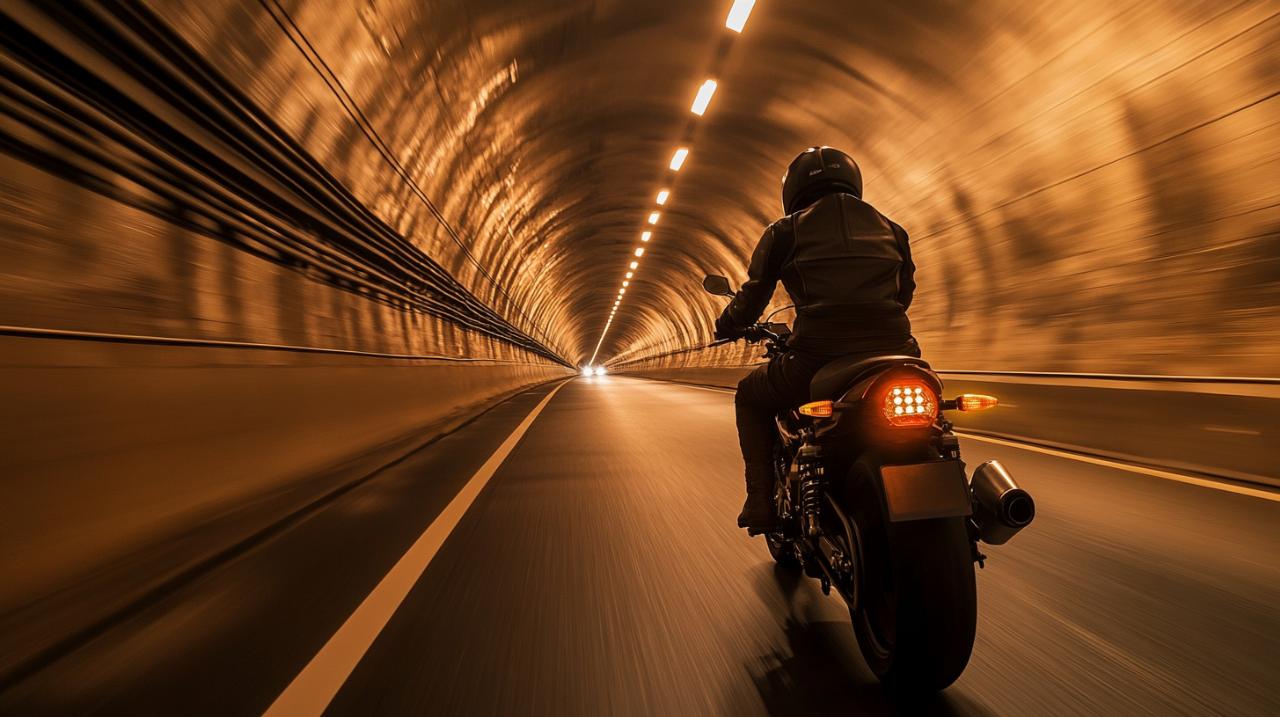
When it is time to board the shuttle, you will be instructed to ride onto the train, positioning your motorcycle on the right-hand side of the carriage. Once in place, you should angle the motorcycle to the left to chock the front wheel securely. This positioning ensures stability during the journey and prevents any movement that could damage your bike or pose a safety risk. Your motorcycle should be left in first gear and resting on its side stand, as instructed by the staff. It is important to follow these directions carefully, as they are designed to ensure the safety of all passengers and vehicles on board.
During the crossing, you are not permitted to remain with your motorcycle. Instead, you will be directed to the passenger carriages, where you can relax in comfortable seating for the duration of the journey. The shuttle is climate-controlled and offers a pleasant environment, making the thirty-five-minute crossing a stress-free experience. There are no waves or sea sickness to contend with, which is a significant advantage over ferry crossings, particularly for those who are sensitive to motion.
Upon arrival in Calais, you will be instructed to return to your motorcycle and prepare to disembark. It is essential to remember that you will now be driving on the right-hand side of the road, a significant change for those accustomed to UK roads. Take a moment to adjust your mindset and familiarise yourself with the new driving orientation before exiting the terminal. Look for signs that say Tunnel sous la Manche if you are returning to the United Kingdom, as these will guide you back to the Eurotunnel terminal. The entire process, from check-in to disembarkation, is designed to be as smooth and efficient as possible, allowing you to focus on the adventure ahead rather than logistical concerns.
Weighing your options: eurotunnel shuttle versus ferry crossings for motorcyclists
Journey Duration, Comfort, and Convenience: Comparing the 35-Minute Tunnel Crossing to Sea Travel
When deciding between the Eurotunnel shuttle and a ferry crossing, motorcyclists must weigh several factors, including journey duration, comfort, convenience, and cost. The Eurotunnel shuttle offers a significantly shorter crossing time of approximately thirty-five minutes, compared to ferry crossings which can take anywhere from ninety minutes to several hours, depending on the route and operator. This time saving can be particularly valuable for those on tight schedules or looking to maximise their time exploring France rather than waiting at sea.
In terms of comfort, the Eurotunnel shuttle provides a controlled, climate-stable environment, free from the pitching and rolling that can affect ferry passengers, especially in rough seas. For motorcyclists, this means no exposure to the elements during the crossing and no risk of sea sickness, which can be a significant advantage. The shuttle allows you to remain dry and comfortable, which is especially beneficial if the weather is poor or if you are travelling during the colder months. Ferries, on the other hand, offer the opportunity to stretch your legs, enjoy onboard facilities such as cafes and shops, and take in the sea views, which some travellers find appealing.
Convenience is another key consideration. The Eurotunnel shuttle operates with high frequency, offering multiple departures throughout the day and night, which provides greater flexibility for spontaneous travel or last-minute changes to plans. The streamlined boarding and disembarkation process is quick and efficient, reducing the overall time spent at terminals. Ferries, whilst offering their own advantages, often require longer check-in times and may be subject to delays due to weather conditions or mechanical issues. Additionally, the Eurotunnel shuttle allows you to remain with your vehicle throughout the journey, which can provide peace of mind for those concerned about the security of their motorcycle and belongings.
Practical Advice for Bikers: Safety Measures, Technical Aspects, and What to Expect During Your Channel Crossing
Regardless of which crossing method you choose, there are several practical considerations to keep in mind. Ensuring your motorcycle is in good working order before departure is essential, as breakdowns or mechanical issues can cause significant delays and inconvenience. Check tyre pressures, fluid levels, lights, and brakes, and carry essential tools and spare parts in case of minor issues. If you are unfamiliar with riding on the right-hand side of the road, consider taking an advanced motorcycle course or slow control course to build your confidence and skills before embarking on your journey. Motorcycle Riders Hub offers a range of training options, including CBT, Module One, Module Two, and advanced courses, as well as motorcycle instructor training for those looking to teach others.
Fuel is generally more expensive in France than in the United Kingdom due to added tax, and the standard unleaded fuel is E10. Planning your refuelling stops and budgeting for higher fuel costs will help you manage your expenses. French motorways are the fastest but often the most monotonous way to travel, and whilst they are cheaper for motorcycles than for cars, they can lack the scenic appeal of smaller roads. Some toll bridges offer free passage for motorcycles on certain weekends, which can provide cost savings and a more enjoyable riding experience. France is increasingly using number plate recognition for toll payments, which can be settled online within seventy-two hours, offering a convenient alternative to stopping at toll booths.
Before you travel, ensure you have all necessary documents organised and easily accessible. This includes your driving licence, passport, registration document, proof of insurance, and any additional paperwork such as a V103 form if your bike is financed. Having these documents ready will speed up check-in and reduce stress at the terminal. Consider investing in a good set of Gerbing heated gloves and clothing, or Roadskin motorcycle wear, to ensure comfort during your ride, particularly if you are travelling in cooler weather. Many retailers offer discounts for motorcyclists, such as ten percent off Gerbing and Roadskin products, and ten percent off Brittany Ferries bookings with the code S0H2Y7.
Finally, make use of available resources to enhance your knowledge and preparedness. Online eLearning platforms, motorcycle training apps, and knowledge centres with riding tips can provide valuable insights and guidance. The Motorcycle Riders Hub offers a comprehensive site map with links to various resources, including pricing information, learners academy, and advanced academy content. Staying informed and prepared will ensure that your journey through the Channel Tunnel is smooth, safe, and enjoyable, allowing you to focus on the thrill of the open road and the adventure that awaits in France.