
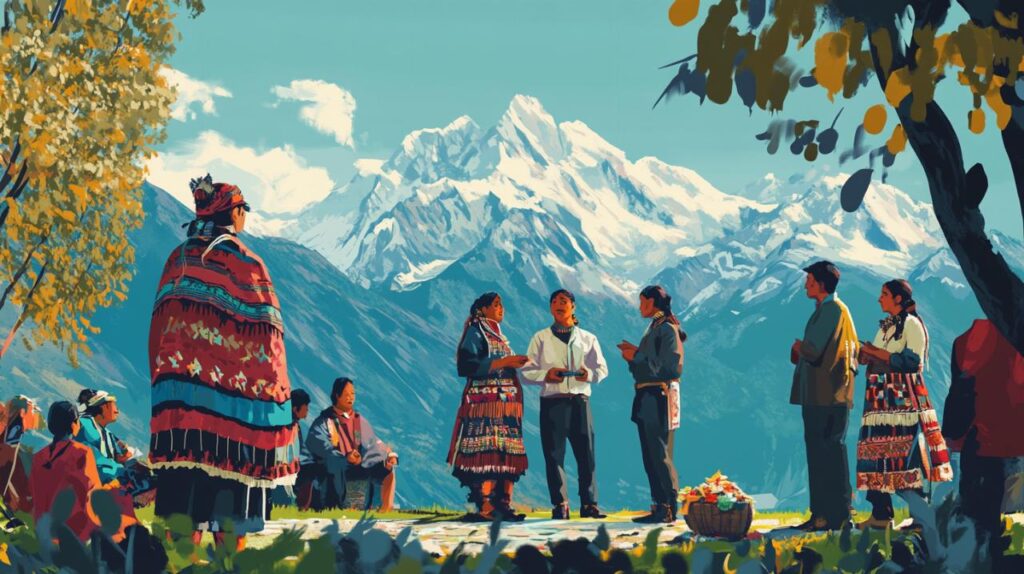
Chile presents itself as a vibrant tapestry where language and culture intertwine in unexpected ways, offering visitors a linguistic adventure that goes far beyond the borders of standard textbook instruction. The country captivates not only through its dramatic landscapes and rich heritage but also through the distinct voice of its people, a voice that carries echoes of both European colonisation and indigenous resilience. For those planning to explore this remarkable nation, understanding the languages spoken here becomes a gateway to deeper connections and authentic experiences.
The linguistic landscape of chile: what you'll encounter
Spanish as the Dominant Tongue: Understanding Chilean Castellano
Spanish stands as the official language of Chile, serving as the primary means of communication across the nation. However, Chilean Spanish, or Castellano as locals refer to it, distinguishes itself dramatically from the variants spoken in neighbouring countries or taught in conventional classrooms. The Chilean dialect has developed its own unique slang and charm, a characteristic that both enchants and bewilders newcomers. The pace at which Chileans speak often surprises visitors, with syllables tumbling over one another in a rapid cascade that can leave even fluent Spanish speakers momentarily lost. This swift delivery, combined with the liberal use of colloquialisms, creates a linguistic environment that demands patience and a keen ear.
The country showcases five distinct regional dialects of Spanish, each adding its own flavour to the national linguistic palette. Northern Chilean Spanish carries influences from the arid landscapes and mining communities that define the region. Central Chilean Spanish, prevalent in the capital Santiago and surrounding areas, represents the most widely spoken variant and sets the standard for much of the nation's media and education. Chiloé Spanish emerges from the misty archipelago in the south, infused with maritime traditions and a slower, more melodic rhythm. Southern Chilean Spanish reflects the rugged character of Patagonia, whilst Andean Spanish blends highland heritage with contemporary expression. These regional variations ensure that a journey across Chile becomes not merely a geographical expedition but a linguistic voyage as well.
Indigenous languages still spoken today: mapudungun and beyond
Beyond the dominant presence of Spanish, Chile maintains a precious linguistic heritage through several indigenous languages that continue to thrive despite centuries of external pressure. Mapudungun stands as the most widely spoken indigenous language, with roughly two hundred thousand speakers keeping the tongue of the Mapuche people alive. This language carries profound cultural significance, embodying centuries of tradition, resistance, and identity. The Chilean government has recognised the importance of preserving this linguistic treasure, integrating bilingual education programmes into schools to ensure younger generations maintain connections to their ancestral voices.
In the northern Andean regions, approximately twenty thousand people speak Aymara, a language that bridges the mountainous territories shared with Bolivia and Peru. The high plateaus and ancient trade routes have preserved this tongue through generations of resilience. Quechua, another language of the northern territories, finds voice among roughly eight thousand speakers who maintain links to the broader Andean world. Meanwhile, on the remote shores of Easter Island, approximately three thousand speakers keep Rapa Nui alive, a Polynesian language that serves as a living connection to the island's mysterious past and its towering moai statues. Perhaps most endangered is Kawésqar, spoken by fewer than one hundred individuals in the southern Patagonian fjords. This language represents one of the last remnants of the nomadic seafaring cultures that once navigated the labyrinthine channels of Chile's extreme south. The Chilean government supports the preservation and promotion of these indigenous languages, recognising that each one holds irreplaceable knowledge and perspectives that enrich the nation's cultural fabric.
My Personal Journey with Chilean Spanish: Challenges and Delights
First impressions: when standard spanish wasn't enough
Stepping off the aeroplane in Santiago with a solid foundation in Spanish grammar and vocabulary, I felt confident about navigating Chile with ease. That confidence evaporated within hours of my arrival. The taxi driver's cheerful greeting contained words I recognised but delivered at a velocity that transformed them into an incomprehensible blur. When I asked him to repeat himself, he slowed marginally but introduced slang terms that my textbooks had never mentioned. This initial encounter set the tone for the first few weeks, during which I found myself constantly requesting clarification and nodding along whilst understanding only fragments of conversations.
The rapid pace of Chilean Spanish became both a source of frustration and fascination. Locals seemed to swallow entire syllables, particularly at the ends of words, creating a musical but elusive quality to everyday speech. The letter 's' often disappeared entirely, transforming common phrases into puzzles that required context and guesswork to decode. I soon realised that survival in this linguistic landscape demanded not just knowledge of Spanish but an entirely new approach to listening. Instead of catching every word, I learned to focus on key terms and read body language, gestures, and facial expressions to fill in the gaps. This adaptive strategy opened doors to genuine communication, even when my comprehension remained imperfect.
Learning the local slang: essential everyday phrases i picked up
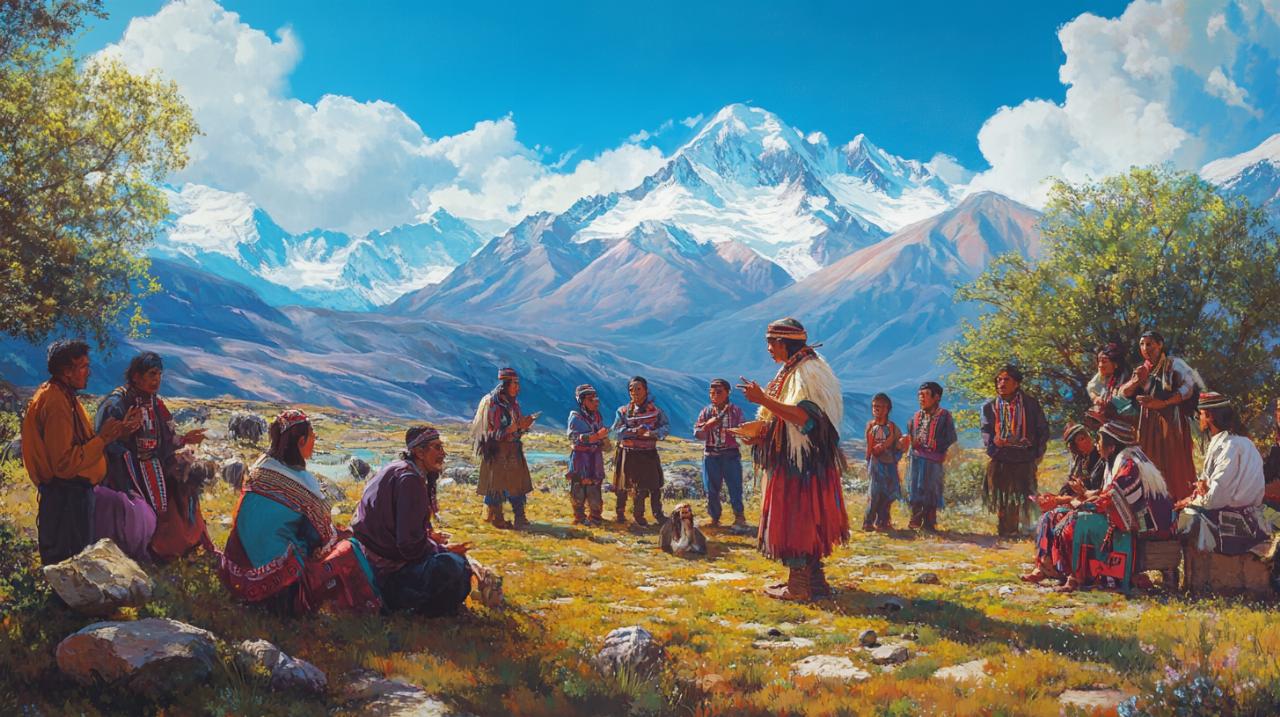
My host family became invaluable guides through the maze of Chilean slang. They patiently explained that the ubiquitous word 'huevón' serves multiple purposes depending on tone and context, ranging from friendly address to mild insult. Initially hesitant to use such informal language, I gradually incorporated it into my vocabulary after observing that Chileans employed it with casual affection among friends. The phrase '¿Cachay?' quickly became indispensable, a versatile expression meaning 'Do you understand?' or 'You know what I mean?' that peppered nearly every conversation I overheard.
I discovered that 'Sí po' and 'No po' added emphasis to affirmations and negations, the 'po' serving as a distinctly Chilean touch that felt both endearing and essential once I understood its usage. When someone said 'Al tiro,' I learned they meant 'right away' or 'immediately,' a phrase that proved particularly useful when ordering food or arranging meetings. The casual greeting '¿Cómo estay?' replaced the formal '¿Cómo estás?' in most social situations, reflecting the relaxed and friendly nature of Chilean interactions. Perhaps most charmingly, I encountered 'pololear,' the local verb for dating or being in a relationship, which sparked countless amusing conversations about courtship and romance in Chilean culture. Talking to young Chileans proved especially helpful for learning modern slang, as they eagerly shared the latest expressions and corrected my pronunciation with good humour. Using these new words in everyday conversation helped cement them in my memory, transforming abstract vocabulary into living tools of communication.
Practical tips for understanding chilean communication
Common expressions that confused me at first
Certain expressions initially baffled me despite my growing familiarity with Chilean Spanish. When someone described a situation as 'bacán,' I initially thought they were using an obscure technical term rather than simply saying something was cool or great. The word 'fome' similarly puzzled me until I understood it meant boring or dull, a judgment I heard applied to everything from films to weather conditions. I found myself particularly confused by the use of 'cachai' at the end of sentences, which essentially asks for confirmation that the listener has understood, similar to 'you know?' in English but used with far greater frequency.
The expression 'estar piola' took several encounters before I grasped that it meant to be calm, discreet, or to keep a low profile. When friends invited me to 'carretear,' I initially imagined some sort of wheelbarrow activity before learning it simply meant to party or go out drinking. The phrase 'me tinca' conveyed a feeling or intuition about something, a concept I eventually appreciated as deeply embedded in Chilean decision-making processes. These expressions, once mastered, transformed my interactions from stilted exchanges into fluid conversations that carried the authentic rhythm of local life.
How to prepare yourself before visiting chile: language resources
For those planning a journey to Chile, preparation can significantly ease the linguistic transition. Standard Spanish courses provide a foundation, but supplementing traditional study with resources specifically focused on Chilean variants proves invaluable. Online platforms now offer videos and podcasts featuring native Chilean speakers, allowing learners to familiarise themselves with the distinctive accent and rapid delivery before arrival. I recommend watching Chilean films and television series, which not only showcase the language in natural contexts but also provide cultural insights that enhance understanding.
Engaging with language exchange partners from Chile through virtual platforms creates opportunities to practise conversational skills and receive immediate feedback on pronunciation and usage. Travel blogs dedicated to Chilean experiences often include sections on essential phrases and cultural nuances that textbooks overlook. Upon arrival, seeking accommodation with a host family rather than a hotel provides immersive language practice and access to patient native speakers who can explain confusing expressions. English is commonly spoken in major tourist areas, which offers a safety net for crucial communications whilst still encouraging linguistic exploration. Carrying a small notebook to jot down new words and phrases as they arise helps build a personalised dictionary of terms actually encountered in daily life. Embracing mistakes as learning opportunities rather than sources of embarrassment accelerates progress, as Chileans generally appreciate efforts to engage with their language and respond with warmth and encouragement. The linguistic landscape of Chile ultimately rewards curiosity and persistence, transforming what initially appears as a barrier into a bridge towards richer cultural connections and unforgettable experiences.